Background

Acknowledgement of Country

The Healing Foundation acknowledges Country, Custodians and Community of the lands on which we live and work. We also pay our respects to Elders and to Stolen Generations survivors, of the Dreaming and of the here and now. We recognise the ongoing nature of trauma experiences for Aboriginal and Torres Strait Islander peoples and commit each day to survivor-led intergenerational healing.

Warning: Aboriginal and Torres Strait Islander people should be aware that this website may contain images, voices and names of people who have passed away.
HF From Sorry To Action Website Banner 1284X550 May2026 V1 ??

From Sorry to Action

A plan to act on Bringing them home (2026-2028)

From Sorry to Action outlines critical priorities and tangible actions to support leaders and policy makers in actualising long outstanding recommendations of the 1997 Bringing them home report.

From Sorry to Action

From Sorry to Action: A plan to act on Bringing them home (2026-2028) (Action Plan) outlines critical priorities and tangible actions to support leaders and policy makers in actualising a number of the long outstanding recommendations of the 1997 Bringing them home report. The Action Plan, developed by The Healing Foundation, highlights the ongoing needs of Stolen Generations survivors across health, wellbeing, records access, redress, sector sustainability, education, and research, that remain unmet three decades after they were called for. Explore more below or download the full action plan.

Priority Areas

The Plan outlines actions in the following five priority areas, which are interconnected and work together to contribute to Stolen Generations healing:

1
Health, social and emotional wellbeing, and ageing
2
Records, redress, and acknowledgements
3
Education, research, and data
4
Sector support and workforce development
5
Governance and accountability
Priority area
1
Health, social and emotional wellbeing, and ageing
1.1 All survivors have access to culturally safe, fully subsidised and equitable aged care, health and community services.
1.2 All survivors and descendants are supported through intergenerational healing and wellbeing.
2
Records, redress, and acknowledgements
2.1 All survivors and descendants have prioritised access to records.
2.2 Stolen Generations records are identified, protected and preserved.
2.3 All survivors have equitable access to redress.
2.4 All agencies involved in the removal of Stolen Generations deliver apologies to survivors.
2.5 Commemorations for Stolen Generations are held and memorials are established across Australia.
3
Education, research, and data
3.1 Every Australian has an increased awareness and understanding of the history of Stolen Generations and the ongoing impacts.
3.2 There is ongoing research into the needs of survivors and their descendants to ensure evidence-based and effective immediate and longer-term support.
4
Sector support and workforce development
4.1 There is a strong and ongoing network of Stolen Generations Organisations.
4.2 Stolen Generations Organisations are building their capacity, are well supported in fulfilling their mandate and are assured of funding continuity.
4.3 A skilled, sustainable, culturally safe and trauma informed workforce operates across sectors and industries.
5
Governance and accountability
5.1 There is strong accountability for the delivery of the Bringing them home report recommendations through the Joint Council on Closing the Gap.
5.2 Data collection and reporting on Stolen Generations and their descendants is strengthened.

Priority Area 1 - Health, social and emotional wellbeing, and ageing

Most survivors are now aged over 50 and eligible for aged care. Appropriately designed, culturally safe, trauma informed health and aged care must be delivered for survivors. Survivors deserve care that meets their needs, and supports them to age with dignity.

The final report of the Royal Commission into Aged Care Quality and Safety (2021) found that Aboriginal and Torres Strait Islander people are under-represented in aged care services despite having significant health needs.1

The Royal Commission and the Interim First Nations Aged Care Commissioner’s report Transforming Aged Care for Aboriginal and Torres Strait Islander People (2025) reported that survivors face administrative, financial, and systemic barriers to accessing aged care, including the lack of trauma aware, culturally safe services, along with rigid eligibility assessment and identity document requirements at the point of entry.

Stronger investment is also needed in community-led services to improve the health and wellbeing of survivors and descendants, and support intergenerational healing.

References

1 Australian Government 2021. Royal Commissioner into Aged Care Quality and Safety Final Report: Care, Dignity and Respect, Volume 2 The Current System, Commonwealth of Australia.

Australian Government Department of Health Disability and Ageing 2025. Transforming aged care for Aboriginal and Torres Strait Islander People. Report from the Interim First Nations Aged Care Commissioner, Commonwealth of Australia.

“The current system requires transformation from generic, one-size-fits-all approaches to care that is designed by and for Aboriginal and Torres Strait Islander people. The research concludes that effective aged care for Stolen Generations survivors must support healing, maintain connections to culture and family, and provide care with dignity and respect.”

Research findings from Murawin


Bringing them home recommendations

The Bringing them home report recommended that reparations to survivors must include measures of rehabilitation (recommendation 3), recognising the lasting trauma of forced removal. These recommendations focused on an Aboriginal and Torres Strait Islander wellbeing model for providing services and programs for survivors, emphasising local healing and wellbeing perspectives, and delivery by Aboriginal and Torres Strait Islander community-based services (recommendations 33A-33C).

How far have we come?

The Are you waiting for us to die? report found that governments across Australia have failed to invest strongly enough in services and supports for survivors and descendants, who have unique and complex needs and experience significant barriers to accessing health, social and emotional wellbeing, and aged care services.

The Australian Institute of Health and Welfare (AIHW) has reported that survivors experience significantly poorer health and social and emotional wellbeing outcomes compared with other Aboriginal and Torres Strait Islander people of the same age. Survivors are more likely to experience violence, homelessness, poor mental health and substance use, and to have chronic diseases, including kidney disease, diabetes, chronic obstructive pulmonary disease, cardiovascular disease and asthma. 

"I’d much rather end up in hospital than an institution - I wouldn’t want to go through that again. You’ve got to listen to what they say, you’ve got to eat when they tell you, you’ve got to stay within the boundaries of where they want you to stay. At home it’s your castle, it’s your home - as long as I can stay in my own home, I’m better off."
 - Uncle Wayne Garlett, Stolen Generations survivor (Ballardong)


"30 years has passed since the Bringing them home report - Stolen Generations survivors deserve better. The government must act to deliver properly funded, survivor led, culturally safe and trauma informed aged care, with priority access and flexible models that allow them to age with dignity, connection and healing." 
- Andrea Kelly, Interim First Nations Aged Care Commissioner (Warumungu and Larrakia)

Priority Area 1 – Actions

1.1

All survivors have access to culturally safe, fully subsidised and equitable aged care, health and community services.

11 actions

  Actions Responsible  Timeframe
1.1.1 Provide alternative access pathways, with flexible identity verification options, for survivors to access My Aged Care. Department of Health, Disability and Ageing (DHDA) December 2026
1.1.2 Exempt any redress or compensation payments made to Stolen Generations or descendants from asset testing for services under the Aged Care Act 2024. Minister for Aged Care and Seniors,, DHDA September 2026
1.1.3 Exempt survivors from Support at Home co-payments. Minister for Aged Care and Seniors,, DHDA September 2026
1.1.4 Establish a permanent, independent statutory First Nations Aged Care Commissioner. Minister for Aged Care and Seniors July 2026
1.1.5

Include within the First Nations Aged Care Commissioner’s remit:
a) Improving access to aged care by survivors.
b) Establishing clear performance measures and reporting on access and uptake to Aged Care by survivors.
c) Monitoring the impact of the new Aged Care Act 2024 on survivors.

Minister for Aged Care and Seniors July 2026
1.1.6 Ensure clear performance measures and reporting on access and uptake to Aged Care by survivors are in place. Minister for Aged Care and Seniors July 2026
1.1.7 Undertake a rapid review of the policy and program supports needed for survivors to age with dignity to inform policy standards and monitoring. NeuRA Aboriginal Ageing Team, The Healing Foundation September 2026
1.1.8 Work with The Healing Foundation and SGOs to co-design a Stolen Generations Access and Prioritisation Card for primary health and aged care services and supports to ensure survivors have equitable and universal access to these services. Minister for Health, Disability and Ageing, DHDA December 2026
1.1.9 Develop a process and timeline for implementation of the card, including identifying any legislative changes required. Minister for Health, Disability and Ageing, DHDA December 2026
1.1.10 Expand the Elder Care Coordinator workforce through specific funding of roles dedicated to supporting survivors to access services through SGOs and Aboriginal Community Controlled Health Organisations (ACCHOs). DHDA September 2026
1.1.11 Establish a formal escalation pathway for survivor aged care complaints, delays and enquiries, to ensure timely responses and culturally safe handling for survivors. This should include:
a) Named escalation contacts
b) Agreed complaint timeframes
c) Trauma informed processes for urgent matters.
DHDA, Aged Care Quality and Safety Commissioner, Australian Aged Care Complaints Commissioner December 2026


1.2

All survivors and descendants are supported through intergenerational healing and wellbeing.

5 actions

  Actions Responsible  Timeframe
1.2.1 Work collaboratively to improve the mapping, coordination and reporting of health and wellbeing services and programs for Stolen Generations survivors DHDA, NIAA September 2026
1.2.2 Provide SGOs with Social and Emotional Wellbeing dedicated funding:
a) Social and Emotional Wellbeing positions
b) Project funding to deliver supports that facilitate intergenerational healing.
DHDA, NIAA July 2027
1.2.3 Support SGOs to respond to the disproportionate impacts of institutional child sexual abuse on survivors through:
a) Additional funding for survivor led, culturally safe healing.
b) Additional workforce supports for SGOs delivering on the National Redress Scheme, recognising the impacts of vicarious trauma and the complex support needs of survivors on workforce wellbeing and retention.
DSS Dec 2026
1.2.4 National mental health policies, including the National Mental Health and Suicide Prevention Plan explicitly recognise and prioritise the enduring impacts of forced removal, including high levels of psychological distress and poor wellbeing outcomes, with a commitment to improving data and services. DHDA, Gayaa Dhuwi Ongoing
1.2.5 Improve mental health data collection and service delivery for survivors by:
  • Co-designing with survivors voluntary identifier/s to support monitoring of service reach and outcomes. 
  • Using the data to prioritise access to mental health and wellbeing services and initiatives for survivors.
DHDA Ongoing


We cannot wait another generation for justice, action must be taken now

This Action Plan highlights the ongoing needs of Stolen Generations survivors across health, wellbeing, records access, redress, sector sustainability, education, and research. These are the ongoing needs that remain unmet three decades after they were called for.

This is unacceptable. However, with immediate and coordinated action, we can support intergenerational healing.

The Healing Foundation is calling on all responsible agencies to commit to the actions in this plan to support survivors across the priority areas:

  • Health, social and emotional wellbeing, and ageing
  • Records, redress, and acknowledgements
  • Education, research, and data
  • Sector support and workforce development
  • Governance and accountability

By committing to these priority actions, we will see an acknowledgment of what’s needed, clear steps towards true and genuine progress, and a better future for remaining Stolen Generations survivors and the many thousands of descendants across the country.

While we know this doesn’t solve all of the Bringing them home recommendations, we’ve set out tangible actions that are needed to get this country further to the commitment to survivors that was made almost three decades ago.

Actions speak louder than words, it’s time to move from Sorry to Action.

“It’s time to take the necessary actions to ensure that no one is left behind, especially Stolen Generations survivors. They deserve recognition, support, and a future where their health and wellbeing are prioritised. Survivors and descendants comprise a large percentage of the adult Aboriginal and Torres Strait Islander population: targeted action could accelerate whole-of-community gains.”

- Professor Steve Larkin, Board Chair, The Healing Foundation (Kungarakan)

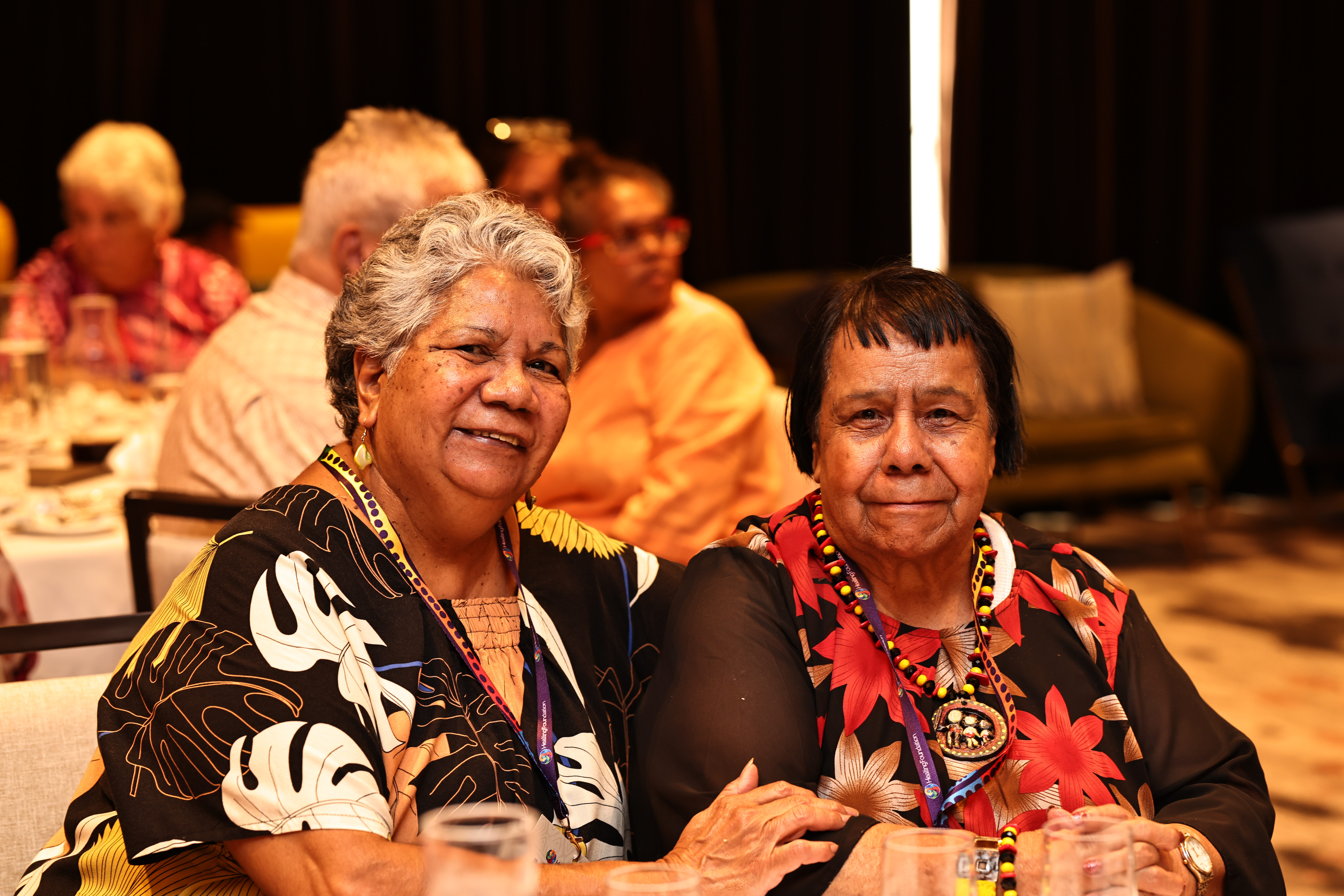
Aunty Josephine And Aunty Valerie

Download the action plan

Implementing this Action Plan in full will result in meaningful progress before the 30th anniversary of the Bringing Them Home report on 26 May 2027.

© 2026 The Healing Foundation. All rights reserved.

Acknowledgement of Country

The Healing Foundation acknowledges Country, Custodians and Community of the lands on which we live and work. We also pay our respects to Elders and to Stolen Generations survivors, of the Dreaming and of the here and now. We recognise the ongoing nature of trauma experiences for Aboriginal and Torres Strait Islander peoples and commit each day to survivor-led intergenerational healing.